One of the first engineers to go remote: ability is stable — and so is my income.
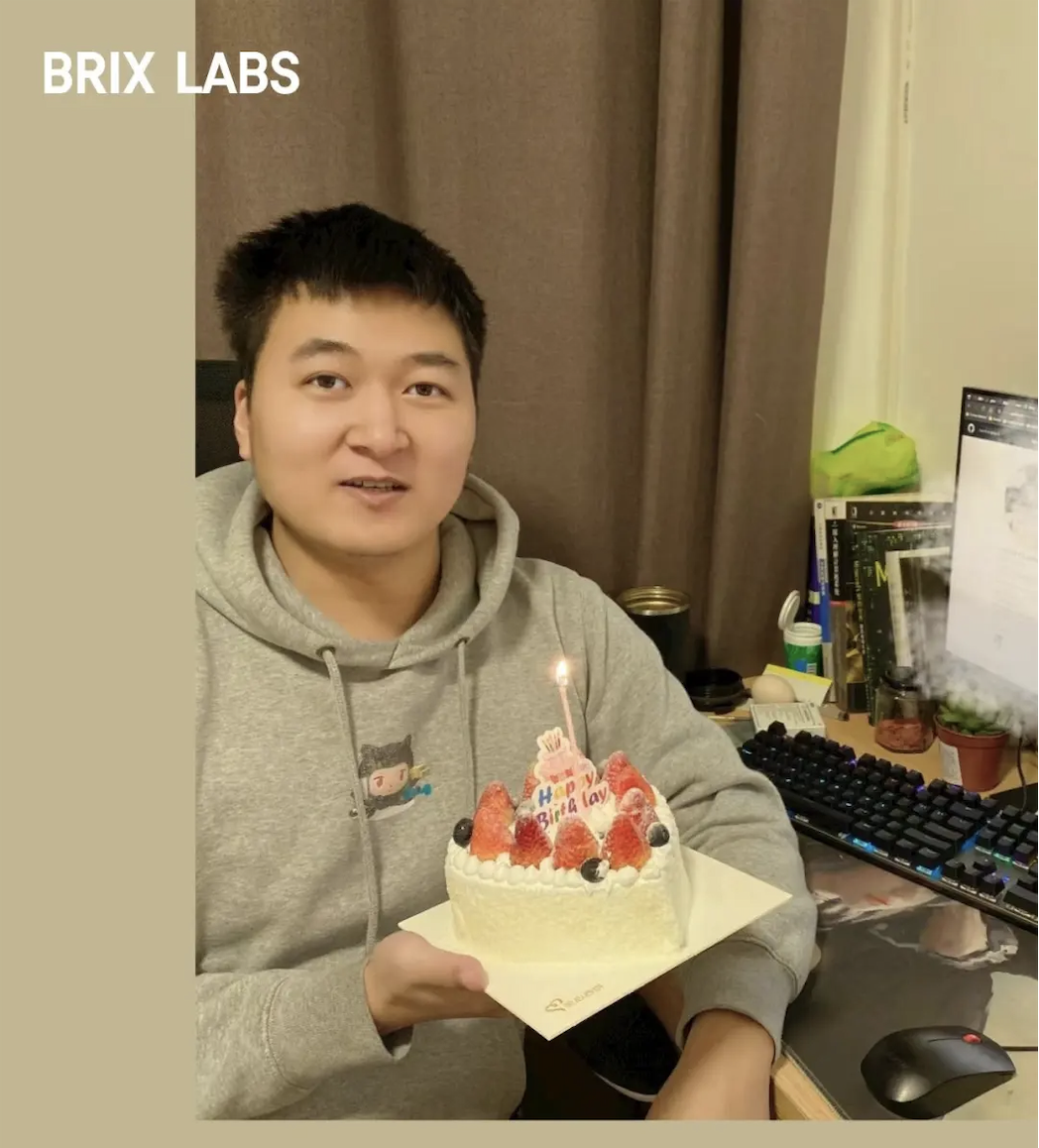
Hi everyone, I'm Vincent, a backend engineer. I joined Brix pretty early, probably two or three years ago now. When I first joined, I was doing part-time remote work alongside a full-time onsite job, mostly helping solve particularly tricky problems.
Around January of this year, I joined a US company's development role through Brix as a full-time remote employee. The current project is blockchain-related. The team is US-based, and the main working language is English, though fortunately our CTO is Taiwanese.
What led you to become a full-time remote developer?
I've been in the software industry for nearly ten years. For most of that time, I prioritized stability when choosing roles. A lot of the concerns engineers have about remote work are ones I used to share, so why did I end up making this choice?
First was the pandemic. For a long stretch, basically everyone was working remotely. That period was like a warm-up for me. I got comfortable with the fully remote format before committing to it.
Second was job security. Before the pandemic, joining a big company, a BAT or a bank, felt like a relatively stable path. You could stay in a stable environment, grow your technical skills, and feel secure.
But looking at China's internet landscape now, in my opinion, no company can honestly call itself stable. Even the biggest companies will cut entire departments. State-owned enterprises may offer a real iron rice bowl, but in those environments income is stable while technical growth stagnates. BAT companies are exhausting, startups are equally risky, and layoffs happen everywhere.
There are no truly stable companies. There are only stable abilities. When your skills are strong enough, your income becomes stable too.
Taken together, my conclusion was simple: there are no truly stable companies. There are only stable abilities. When your skills are strong enough that you can build things in any domain, when you stop limiting yourself and keep growing, that's stability. At least your income will be stable.
Has your salary changed since going remote?
Roughly speaking, it doubled. That said, blockchain may carry a premium, so it might not double in every field.
What's been your biggest challenge in remote work?
Remote work is somewhat different from onsite, and the main thing is the personal mindset shift. It happened in two phases.
In the first phase, without fixed hours or location, and without anyone chasing you for progress, I got a bit loose. Work pace slowed, and I became somewhat lazy.
In the second phase, once you recognize the problem, you start taking measures. Even though I'm working from home, I still wake up early, get dressed, and make the bed. The ritual removes any temptation to crawl back in. Building internal drive is essential.
On the work side, a major difference between full-time remote and onsite is the sheer variety of projects. Some may be in domains you've never touched before. And since colleagues may be spread across time zones, real-time communication isn't always possible. You increasingly need to solve problems independently. The overall technical bar is higher.
What does remote work look like day to day?
Again, two phases. At first, it was pretty relaxed. Work felt free: have a leisurely meeting in the morning, grab a coffee in the afternoon, work from a cafe. No office to report to.
But then the second phase hits. Right now, a typical day is: I wake up and immediately open my calendar. What's on the agenda today? What didn't I finish yesterday? I start organizing before I even wash my face. Since I don't have a commute, sometimes I use that time to sleep in. Eyes open, still in bed, and I'm already working.
By the time I finish the urgent things, it might be 11am. I haven't eaten breakfast. I rush downstairs, wash my face, eat, nap, then get back at it until late at night. Some stretches I barely leave the apartment during the week, only going out on weekends.
Do you feel more free, or less free?
It depends on how you define it. If you want a relaxed, comfortable work pace, that's possible. But your growth will be slow. Morning meeting, then breakfast, then afternoon tea, not much actual work time. That's a valid choice.
But a great engineer becomes great by working with enormous amounts of code, encountering a wide variety of cases, and growing quickly through that. Since joining Brix, I've constantly found gaps in my knowledge, domains I don't know, technologies I haven't touched.
I'm curious. When something is put in front of me that I've never seen before, sometimes my boss asks me a question first thing in a morning meeting about something completely new to me, and I'll sometimes stay up all night. Not because anyone told me to. I just want to know why. Sometimes I even miss the morning standup. Everyone understands, and that's fine.
The flexibility is real. The space for self-directed learning is real. Remote work can make your life and work beautifully balanced. Or it can be demanding, intense, and full of growth. It all depends on what you choose.
Does the lack of fixed hours affect communication and efficiency?
We have fixed collective meeting times, usually around 7:30 to 9am China time, which works reasonably for everyone. For smaller things, sometimes we just message or leave notes asynchronously. Because teammates are in different time zones, real-time back-and-forth isn't always possible. But the challenge isn't really the time zones.
My particular take is this: engineers must be deeply familiar with their own work to make async communication effective. For example, my boss assigns a task in a 9am meeting, then goes offline to sleep because he's in the US. From 9am to 9pm, I'm working, and I can organize that time however I want. But I can't reach him during that window.
That means the engineer needs to know the work well enough to push it forward independently. If the task assigned is something you've done before, you build it, then confirm with your boss in the evening. Any issues, fix them. No issues, ship it. Fluency in your work is one of the most important skills in remote work, and it's not always friendly to beginners.
Are you satisfied with your current work situation?
For where I am right now, yes. Remote work leaves me a lot of time to dig into things that interest me. And I genuinely feel my technical growth has been faster in remote work than it ever was onsite.
Can you show us your workspace?
Sure. It's pretty simple: a large monitor, a desk, and the bed is right to my right. Two computers, one Windows and one Mac. A pair of headphones. And a cold drink in the mini-fridge to my left. I don't even need to stand up to reach it.
What collaboration tools do you use?
Effie for logging work notes and reflections, Slack for team communication, Confluence for internal documentation, and Zoom for daily team meetings.
Any advice for people looking to go remote?
If you have the idea, join sooner rather than later. Remote and onsite aren't mutually exclusive. With an onsite job, your options are limited to your city or even your neighborhood. With remote, you're looking at a global pool of positions, far richer, and your time is entirely your own.
The growth is also significant, technical skills, soft skills, all of it. And it's a long-term, lasting kind of growth. In China there's this saying that developers expire at 35. But if you go remote, it's very possible to extend your career to 50 or 60, until you decide you don't want to work anymore.
And why sooner? Because transitioning from onsite to part-time remote to full-time remote takes time. You can't just quit an onsite job and seamlessly start remote the next day. There's a real adjustment period. So I'd say: make the transition before 35. Get your English, your soft skills, and your remote-work habits in place. That way your career runway after 35 is much, much longer.
If you stay onsite until 34 or 35 with no time to keep learning, your English will have faded. And fading English directly limits your opportunities on the global market. If you try to build all those hard and soft skills after 35, there simply isn't enough time. Start early.